Students Research Aquatic Connectivity

UNF's Institute of Environmental Research and Education (IERE) is partnering with local organizations, including the Northeast Florida Regional Council, to conduct research assessing aquatic connectivity at road-stream crossings throughout the region. Funded by the National Fish and Wildlife Foundation, the project examines culverts, bridges and other crossing structures to evaluate aquatic organism passage, floodwater drainage and infrastructure conditions along three major river systems in Northeast Florida.
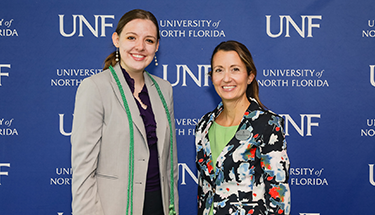
Led by IERE's research team, including Lead Faculty Scientist Jessica Barnes, Ph.D. and Research Coordinator Sydney Barrett, M.S., a group of UNF student researchers spent the summer traveling across the region to collect field data.
Kaitlynn Twichel, one of three student research assistants working on the project, shared how the motto, "think like a fish," helps the research team look at road crossings from the perspective of the many aquatic animals trying to move through them. Twichel said, “We have to pay attention to every small detail as even minor changes in water depth, flow, or obstructions can make a crossing difficult for a fish to navigate.” This perspective helps the team better understand barriers that contribute to aquatic habitat fragmentation and increased flooding risks.
The project provides students with valuable opportunities to apply classroom knowledge to real-world challenges while gaining hands-on professional experience. Student researchers are learning to use a variety of geospatial and field tools and the National Aquatic Connectivity Collaborative (NACC) protocol to collect, manage, map, and analyze data. These skills allow them to identify patterns and trends across hundreds of sites and contribute to meaningful environmental research.
While she acknowledges the challenges of hiking through dense vegetation in Florida's summer heat while carrying field equipment, Kaitlynn says, "what I love most about this research is the ability to get out in the field and experience these often unseen habitats in our local ecosystem. You drive over culverts all the time and don't even realize what's happening underneath and how much life is actually in these little waterways. I really like being able to see that firsthand and knowing that the data we're collecting can help us better understand where aquatic animals are able to move and where they're running into barriers."
The findings from this research will help inform future regional planning efforts aimed at improving waterway connectivity and flow. These improvements can benefit fish and other aquatic wildlife while also reducing flood hazards and enhancing coastal resilience throughout Northeast Florida.