
UNF MedNexus Research Innovation Fund
2026 - 2027 MedNexus Research Innovation Fund Scholars
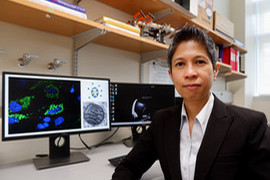
Dr. Candice Ginn Tahimic, Biology
Identifying cancer cell vulnerabilities through mitochondrial systems biology
Mitochondria are small but essential structures within cells that generate energy and help cells respond to stress- functions that cancer cells depend on to survive under challenging conditions. My team will study how mitochondrial proteins work together as an interconnected system to support cancer cell survival. By disrupting this system and observing how cancer cells adapt, this research aims to uncover hidden vulnerabilities that could be targeted to develop more precise and effective cancer treatments.
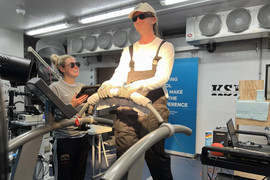
Dr. Michael R. Szymanski, Kinesiology
Validating Wearable Devices to Monitor Heat Strain During Physical Activity in the Heat
This project will examine whether wearable devices can accurately detect increases in body temperature during physical activity in hot environments. Participants will complete controlled exercise tests while device readings are compared to gold-standard measurements. The goal is to identify reliable tools that can be used to monitor heat strain and help prevent heat-related illness.
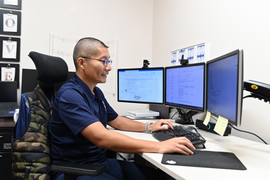
Dr. Jasper Xu, Health Administration
Evaluating Healthlink JAX: A technology-enabled virtual safety-net care model for Uninsured Duval County Residents
This project will evaluate Healthlink JAX, a free 24/7 virtual care program designed to help uninsured Duval County residents get timely care without relying on the emergency department for non-urgent needs. Working with Telescope Health, the UNF research team will study whether this technology-enabled model improves access to care and reduces avoidable healthcare costs. The findings will help local leaders understand the program’s value and guide future community health innovation.
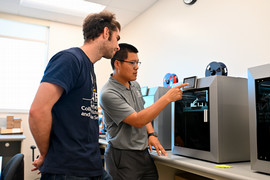
Dr. Longfei Zhou, Advanced Manufacturing Engineering
Vision-to-Action AI Robotics for Colonoscopy Automation
In this project, UNF will collaborate with Mayo Clinic Jacksonville to develop an AI-assisted tool for colonoscopy automation. We will install sensors on a colonoscope to collect action and imaging data which will be used to train an AI model that can provide frame-level actions for future colonoscopy examinations.
Dr. Nelson Delfino de Campos Neto, Mechanical Engineering
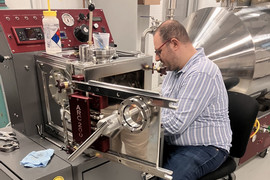
Biocompatibility evaluation of newly developed low elastic modulus biomedical alloys for implants
This project will continue our efforts in the development of new metallic alloy compositions to be used as biomedical materials for implants. Specifically, biocompatibility of our newly developed low elastic modulus alloys will be assessed based on electrochemical analysis. The new biocompatible materials potentially discovered in this project could shape new solutions in implants and help improve patients’ quality of life.
Dr. Stuart Chalk, Chemistry & Biochemistry
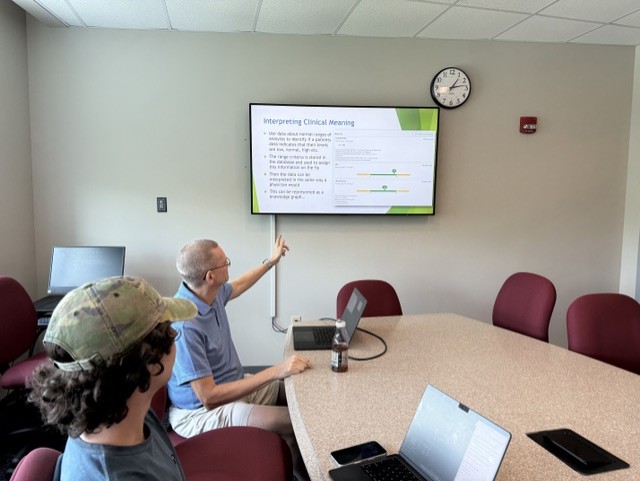
Integrating Microbiome Multi-Omics and Druggable Genome Data to Identify Prediabetes Drug Targets
This work involves the integration of two NIH Common Fund datasets to model prediabetes in order to identify possible drugs (based on genomics) that can either be repurposed or developed for the treatment of prediabetes. The project builds a detailed map of patient health information and uses it with AI tools like Large Language Models (LLMs) to find patterns and insights about prediabetes.