Skip to Main Content
Digital Humanities Institute
oneColumn

Projects

This page lists the projects currently affiliated with the Digital Humanities Institute. See also our listing of past projects.
  • Accessible Classics: Digital Adaptations for People with Reading Difficulties

    “Accessible Classics” is a student collaborative project that aims at making classic literary and educational texts accessible to people with reading difficulties. The project relies on the premise that access to reading is a universal right and that inclusive education can erode the borders that segregate communities and individuals.

    The project launched with bilingual adaptations of Spanish literary texts (Don Quixote --an abridged version--, The Lay of the Cid, and Lazarillo de Tormes), which follow both the International Federation of Library Associations and Institutions (IFLA) guidelines and the Inclusion Europe Standards. The multimodal format of the project, which combines images, texts, audio, and video, acknowledges the plurality of literacies and its vital role in promoting inclusiveness. Besides employing traditional methods such as “close reading”, students work on the adaptations with the aid of computational text analysis, data visualization, and stylometry.


    maria angeles fernandez headshot

    Faculty Project Leader


    María Ángeles Fernández Cifuentes is an associate professor of Spanish at UNF. Her research focuses on modern adaptations of early modern Spanish texts and the role of Information and Communication Technology (ICT) in education, particularly in the teaching of literature.

  • coloniaLab

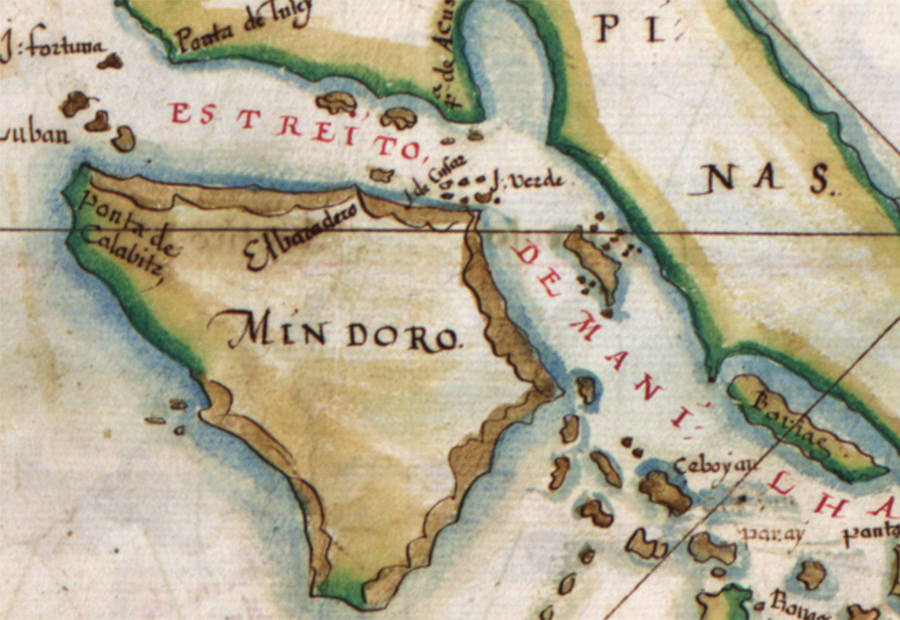
    Detail of 17th century map of the Philippines

    Clayton McCarl, professor of Spanish and digital humanities

    coloniaLab is a workshop for the collaborative digital edition of texts related to early Latin America. Since 2016, the project has engaged over 100 students in the transcription and TEI-XML encoding of manuscripts and rare print materials from the colonial period and nineteenth century. coloniaLab's work is divided into three main series, focusing on documents related to the history of Africans and their descendants in the Antioquia region of present-day Colombia, the Second Spanish Period (1783-1821) in Spanish Florida, and piracy on the coasts of Chile in the late seventeenth century. 

  • Editing the Eartha M.M. White Collection
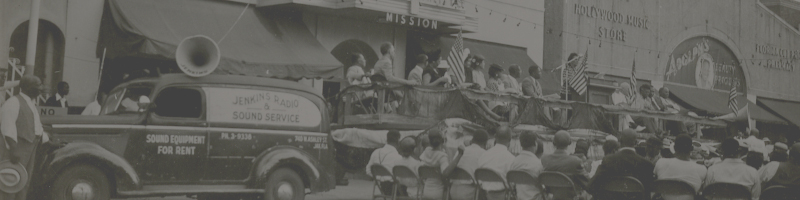
     

    Clayton McCarl, professor of Spanish and digital humanities

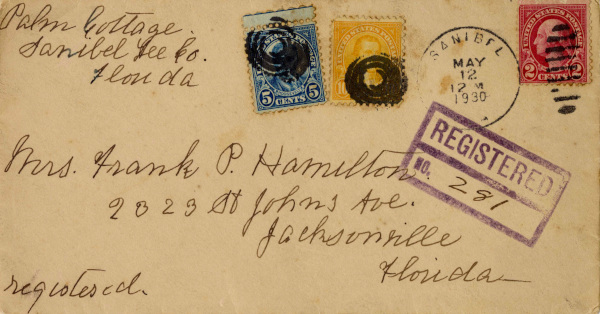
    Editing the Eartha M.M. White Collection is a project that engages UNF students, faculty and staff as archival researchers and digital editors. The project is centered on the electronic edition of personal correspondence and other documents, held in Special Collections at UNF's Thomas G. Carpenter Library, related to Eartha M. M. White (1876–1974), founder of the Clara White Mission and a leader of Jacksonville’s African American community. 

  • Embroidering for Peace and Memory Digital Archive
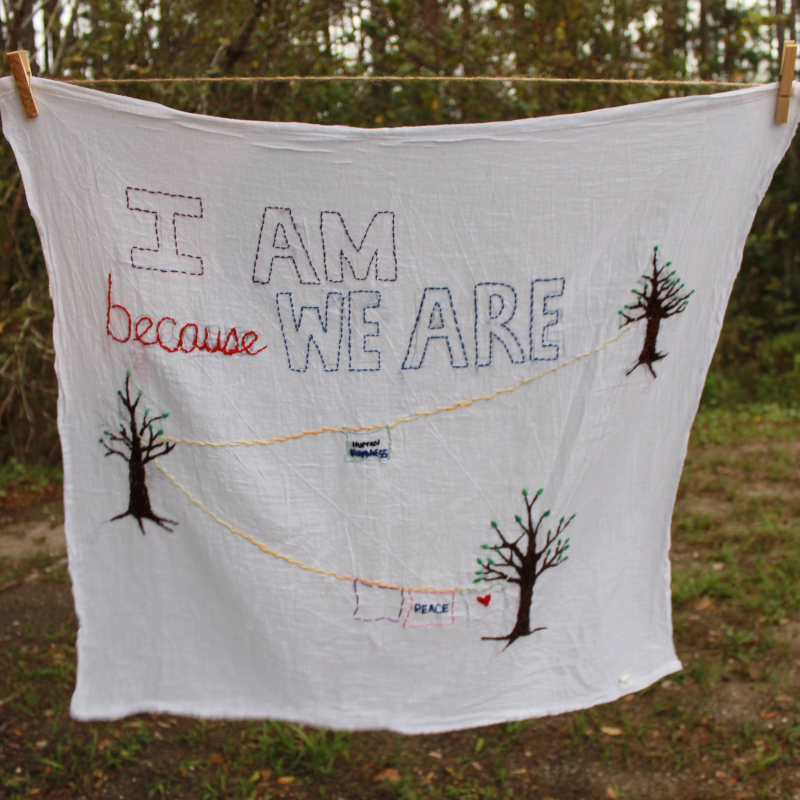
    Embroidering for Peace and Memory is an annual event that takes place in March at UNF to commemorate Women's History Month. UNF students, faculty and staff from across campus gather to embroider on pieces of white cloth messages of peace and the stories of people around the world who have endured the violation of their rights. So far, approximately 200 pieces of embroidery have been created and collected in more than 13 languages, highlighting the culture and diversity of UNF and the North Florida community. In recent years, this project has also involved students from Stanton College Preparatory High School. Constanza López, associate professor of Spanish, leads this project, with support from the International Studies Program and the Department of Languages, Literatures and Cultures.

    The Embroidering for Peace and Memory Digital Archive makes the embroidery produced in this project available online. The archive includes digital images, notes about the personal stories behind the embroidery, and metadata that will make the materials searchable and sortable by predefined categories. Professor López began building this archive in the fall of 2017 in collaboration with International Studies/Philosophy major Rebecca Weiner. Rebecca has produced archival photographs of the embroidery, created written material about the pieces based on discussions with Professor López and project participants, developed curatorial categories for organizing the material, prepared the corresponding metadata. She has also designed and constructed the prototype website using the open-source collections management tool Omeka.


    Constanza Lopez headshotFaculty Leader


    Constanza López is an associate professor of Spanish in the Department of Languages, Literatures and Cultures. She obtained her Ph.D. in Hispanic Literatures at The Graduate Center of the City University of New York. Her research interests include Latin American Literatures of the XX and XXI centuries, women writers, autobiography and testimonio, gender and violence, film and documentary, human rights and activism, migrations, and Hispanics in the U.S. She is author of Trauma,memoria y cuerpo: el testimonio femenino en Colombia, 2012. She is currently working on a manuscript for a book titled Gender and Testimonio in Colombian Hip Hop

  • Enciclopedia del Glitch Latinoamericano

    What is glitch cinema?

    The term glitch, according to Rosa Menkmann, refers to “states of aggression, unaccepted sounds, disturbances.” As Menkmann explains, glitches “[a]re not a message, they don’t define, but, as silences, they can be used to re(define) its opposite, they exist as a regenerative device” (2010). Undesirable and inconvenient, the glitch allows the machine to do a performative act in the work of art, by showing its own imperfections. 

    In Latin America, from the late 1990s until now, we have participated in what Mónica Delgado calls a “culture of glitch.” Most of our film consumption, she argues, from Argentina to Mexico, has been through an informal market that began with pirated Betamax and VHS videos, then copies of black-market DVDs, and most recently, illegal downloads of movies as digital files. 

    During this time, the glitch has evolved from being an unintentional imperfection to be both an aesthetic concept and a deliberate technique that allows creators of experimental movies and short documentaries to playfully manipulate film for rhetorical purposes, usually as a form of social and political critique. The ludic character of these visual creations centers the filmmaking process itself and reclaims inferior production values as an essential part of the final product. Some of these shorts reinterpret classical films, like Sergio Pinedo’s Volivia,  (2014, https://vimeo.com/105923299), or the work of the Peruvian Illich Castillo in Qué tan lejos está el triunfo de la voluntad (https://vimeo.com/45901553). Other experimental filmmakers appropriate, combine, and alter material from YouTube, such as the Venezuelan short Se los bailan a todos/ Follow your leader  (2014, https://vimeo.com/100649085by The Dataïsts, Maggy Almao and Antoine Marroncles, which parodies world leaders through manipulated footage of them dancing. The recovery and reinvention of Indigenous cultural tradition is also of interest of some filmmakers, as evidenced, for instance, by Oscar Nodal’s short Codex Remix (https://www.oscarnodal.com/works), a short film that uses pop culture elements to engage with and reinterpret the Codex Fejervary Mayer, a rare pre-Hispanic pictorial manuscript.

    Surrealist image of computer screen background.

     "Volivia" (Sergio Pinedo, 2014) Bolivia

    Photo displaying movement of dance

    Sǝɭ°s bΛïɭΛʁ°N a t°doS - F°ll°w your ɭeΛders" (The Dataïsts: Maggy Almao y Antoine Marroncles 2014) Venezuela


    Surrealist image of cartoon owl

    "Codex Remix" (Óscar Nodal, 2014) México

    Movie still of young girl against painted background

    "Videofilia y otros síndromes virales" (Juan Daniel Molero, 2015) Perú

    Project Leader


    Dr. Andrea Adhara Gaytan Cuesta is a Mexican and Latin American Studies specialist. Her research includes 20th and 21st Latin American literature, film, and other cultural productions that draw from interdisciplinary studies like Disaster and Catastrophe Studies, Science Fiction, and Border and Urban Studies. Her work interrogates the representations of Mexican and Latin American cultural artifacts that derive from social, indigenous and environmental movements, by illuminating and exploring the trauma, fear and anxieties created by satire and horror in apocalyptic imaginaries.

    Some of her recent publications comprise “Penta-pandemic: Covid 19” MARLAS, Poetry about the Pandemic. In Roof, M., 2020. Sacudidas privadas compartidas: poesía de la pandemia. Middle Atlantic Review of Latin American Studies; “Of Mexican Masks and Pandemics: Protest, Culture and Identity” in Reimaging Latin American Studies; “From Narcozombies to Aztec Cannibals: The (Re)Invention of the Zombie in Contemporary Mexican Narrative An-Other Zombie, Routledge (upcoming), and as a translator in Pasado de moda. Expresiones culturales y consumo en la Argentina. [Out of Style. Cultural Expressions and Consumption in Argentina] Ampersand, Argentina, 2016 and Elvir, Lety y María Roof, eds. Women's Poems of Protest and Resistance: Honduras, 2009-2014. Bilingual edition. [Honduras, golpe y pluma. Antología de poesía resistente escrita por mujeres (2009-2014)]  Casassola, Washington D.C., 2015.

    Campus Partners


    In México, I will conduct research and interviews with individual creators and diverse institutions, including the Centro de Experimentación Cinematográfica (CEC), Cineteca Nacional, Filmoteca de la UNAM, Instituto de Artes Estéticas (UNAM) México, and the Workshop for Experimental Cinema of the Morelia Film Fest. As a member of the UNF Film Studies Committee, I would like to collaborate with Movies on the House, as well as with Dr. Nick de Villiers and Dr. Alison Bruey, whose expertise in film history, film technique and theory would be invaluable for my project. 

    International Partners


    In México, I will conduct research and interviews with individual creators and diverse institutions, including the Centro de Experimentación Cinematográfica (CEC), Cineteca Nacional, Filmoteca de la UNAM, Instituto de Artes Estéticas (UNAM) México, and the Workshop for Experimental Cinema of the Morelia Film Fest.

  • Enviro Rights Map

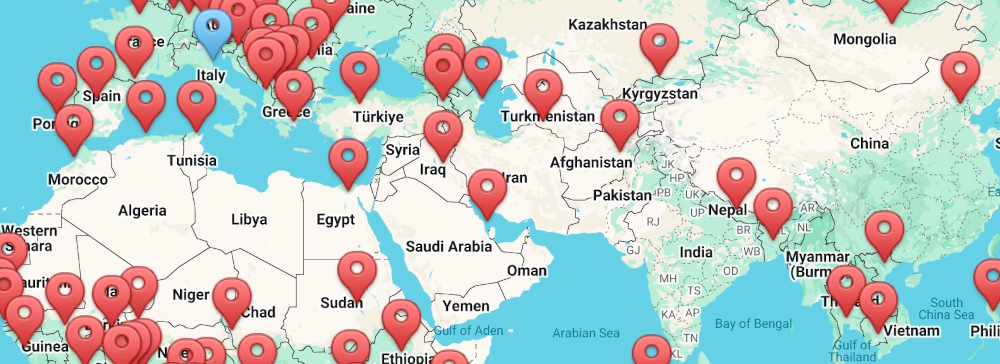
    Enviro Rights Map is a dynamic, Google Maps-based resource that catalogs environmental rights throughout the world. The website was conceived as a means of democratizing information about environmental rights through a user-friendly, visually engaging format. It provides users with historical and current information regarding the prevalence of environmental rights and statements of public policy in national constitutions, and it is freely available for students, scholars, and the general public. Subsequent changes to environmental rights provisions and questions regarding the justiciability of these provisions are addressed in brief comments on country pages where appropriate. The project was developed by Josh Gellers, Assistant Professor in the Department of Political Science and Public Administration at the University of North Florida, in partnership with Widener University Delaware Law School. Data for this website were compiled from the Comparative Constitutions Project, HeinOnline’s World Constitutions Illustrated, Global Environmental Constitutionalism by James R. May and Erin Daly, and The Environmental Rights Revolution by David Boyd. In the future, subnational environmental rights will be added to the map as well. Research assistance was provided by students at UC Irvine (Sarah Entezari, Ioana Raducu, and Rehan Vaid), and Delaware Law School (Katharina Earle and Tyler Wilk).

    To view the project, see: Enviro Rights Map

    Josh Gellers headshotFaculty Project Leader


    Josh Gellers, PhD, LEED Green Associate, is an Assistant Professor in the Department of Political Science and Public Administration at the University of North Florida, Research Fellow of the Earth System Governance Project, and Honorary Fellow of the Southasia Institute of Advanced Studies. He is also a 2016-17 U.S. Fulbright Scholar to Sri Lanka. Josh’s research focuses on environmental rights and sustainable development. His work has appeared in Critical Discourse Studies, International Environmental Agreements, Journal of Environmental Law and Litigation, Journal of Human Rights and the Environment, Review of Policy Research, Sustainability Science, and Transnational Environmental Law.

  • Heca Utimile (Our Land): An Indigenous History of Northeast Florida

    "Heca Utimile (Our Land)" is a project that aims to decolonialize local Indigenous history and tackle pervasive myths that position the Mocama (local Timucuas), Guale, and Yamasee peoples as irrelevant to local history, or merely the prequel to the real story. 

    Student have developed DH modules in five major chronological/thematic groups that collectively offer a rich overview of the deep Indigenous history of our region from 10,000 years ago to the mid-seventeenth century. Additional modules will examine local Indigenous history from the 1660s-1702 (when the Yamasees and then Guales moved into our region), Indigenous survival after 1702 (when refugees of a massive assault emigrated out of our area), and the local Mocama community of Sarabay. The research and emerging scholarship are being converted to a public, digital audience through digital mapping and story-telling, including the creation of an alternative Indigenous walking tour of Fort Caroline. The project will be published online in summer 2022.


    Faculty Project Leaders


    Denise Bossy headshotDr. Denise I. Bossy specializes in cross-cultural relations between Indians, Europeans, and Africans in the early South. She offers upper-division courses on the history of early America, Florida, American Indians, and seminars on Southeastern Indians, gender and race, family and community, comparative slaveries, and U.S. Readings I. Her current research focuses on the Yamasee Indians of Florida, Georgia, and South Carolina.


    Keith Ashley headshotDr. Keith Ashley is an Assistant Professor of Anthropology. Over the past 20 years, he has been involved in archaeological excavation and research throughout the southeastern U.S. Field projects have ranged from 4000 year old shell middens along the Atlantic coast to 17th century Creek Indian villages in central Alabama. His current research focuses on the archaeology of Native Americans in northeastern Florida before and after European contact. 

  • Initiating ZooMAP: the Zooarchaeology of Mycenaean Artisans Project

    "Initiating ZooMAP" is a project that aims to combine archaeological and digital analysis methods to elucidate how animal and human lives of the Mycenaean people in ancient Greece were connected to those of the wider Mediterranean region during the Late Bronze Age.  

    For the initial phase of this project, undergraduate students will collect and visualize a variety of data in map form, including animal symbolism evidence, ancient texts about herds and sacrifices, and evidence of the animals that lived and were used at the sites based on the remains of the individual fauna. With this data, students will decenter the perspective of human-animal interactions at Mycenae, which is currently largely based on exceptional finds of animal art in elite contexts. Ultimately, the online publication of the repository as an open-access webpage will encourage others to address a variety of anthrozoological questions using the assembled information. Understanding human-animal interactions during a time of unprecedented inter-regional connectivity in prehistory will lead to a better understanding of the processes that led to increasing globalization and the associated environmental crises of the current day.


    jacqueline meier headshotFaculty Project Leader


    Dr. Jacqueline Meier is an Assistant Professor of Anthropology in the Department of Sociology, Anthropology and Social Work. She is a zooarchaeologist and her research focuses on the remains of animals from archaeological sites in the Mediterranean region. She studies human-animal interactions at archaeological sites, spanning from the time of the Neanderthals to that of the Romans. 

  • Nocheztli: La Grana Cochinilla

    Drawing of cactus with the words "Nocheztli: La Grana Cochinilla"Anne Pfister, associate professor of anthropology
    Alexandria Kledzik, sociology (2023)
    Susie Mabry, international studies
    McKenzie Neulinger, anthropology/biology
    Quinnlan Nordheim, interdisciplinary studies (2023)

    Nocheztli: La Grana Cochinilla (in production) is an ethnographic film about human interactions with cochineal, a scale insect first domesticated in Mexico as early as 2000 BCE and long commodified for the red dye it naturally produces. Our film portrays intimate contemporary human-cochineal interactions and associated political economies in Oaxaca, Mexico. We follow individuals and families working with cochineal at various stages. We begin with production and harvest, see cochineal dye used in modern art and artisanal trade, and meet families and researchers revitalizing cochineal as a cultural and economic resource. Our film challenges assumptions about human orientations to insects and interrogates the aestheticization of boutique production of Oaxacan cochineal. We showcase how culturally-specific traditions are not seamlessly inherited but dynamic and contextual as knowledge endures periods of loss, reinterpretation, and reinvention.

  • North Florida Editorial Workshop


    Clayton McCarl, professor of Spanish and digital humanities

    The North Florida Editorial Workshop engages students in the transcription and digital publishing of archival materials related to the history of the region. NFEW teaches students the theory and practice of digital textual editing, a scholarly process that challenges participants to think critically about written materials, analyze how we construct narratives, develop research skills, and play an active role in the preservation and transmission of cultural heritage material. 

  • OER Immersive Multimedia Materials Project

    The OER-Immersive Multimedia Materials Project project aims at the design and development of Open Educational Resources (OER) in the classroom as a model to integrate community-based learning and undergraduate research in lower and upper-level courses of the Spanish Program at UNF. It specifically involves the design of immersive educational materials with a focus on Virtual Reality and reading accessibility. The adaptability of digital technology becomes a key element of our project within the context of the emergence of new learning modalities that place accessibility at the center stage of educational innovation. This project is associated with “Accessible Classics: Digital Adaptations for People with Reading Difficulties”.

    Project Leaders 

    Johana Barrero headshotProfessor Barrero is an Instructor of Spanish in the Department of Languages, Literatures and Cultures. She obtained her Ph.D. in Latin American Literature at Purdue University. Her research interests include Latin American Colonial Literature, Latin American Indigenous Communities, Digital Paleography, and Virtual Reality in language acquisition. She is currently working on a manuscript for a book titled "La herencia no se roba. Testamentos indígenas de Bogota."

    María Ángeles Fernández Cifuentes headshotMaría Ángeles Fernández Cifuentes is an associate professor of Spanish at UNF. Her research focuses on contemporary adaptations of early modern Spanish texts and the role of Information and Communication Technology (ICT) in education, particularly in the teaching of literature.

  • Observations through Photovoice: Authentic Learning in the Lecture Hall and Beyond

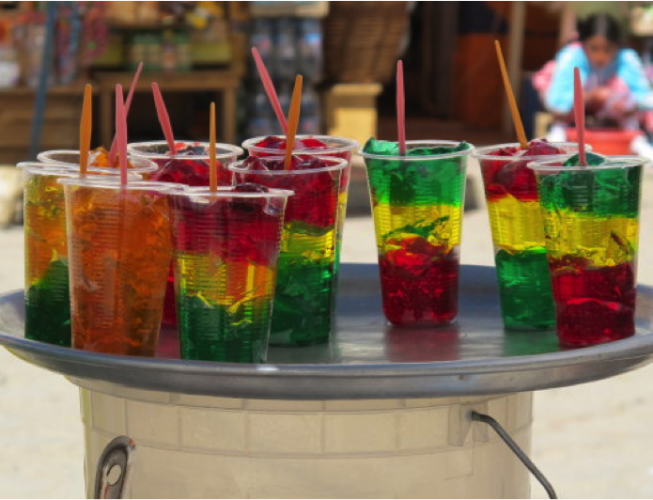
    table with 10 red, yellow and green drinks“Observations through Photovoice” is a creative, participatory, semester-long project, piloted in 2015, that adapts photovoice, a participatory, ethnographic research method, to engage students in a large survey-style Introduction to Anthropology course.

    This semester-long project, piloted in 2015, invites UNF undergraduate students to demonstrate their understanding of central themes in anthropology (socialization, gender, “race”, for example) by taking digital photographs that capture these cultural phenomena in their social worlds. Throughout the semester, students use Flickr, an online, social photography service, to classify and contextualize their images, survey their fellow classmates’ photos, and add to their collections as they learn new anthropological concepts. to respond to exploratory themes in anthropology by taking digital photographs of their surroundings. Students have the opportunity to demonstrate their understanding of basic, and increasingly-complex, anthropological concepts while simultaneously experimenting with contemporary qualitative research methods.

    The dynamic nature of “Observations through Photovoice” engages learners from diverse modalities (visual, linguistic, kinesthetic, analytical, and global learners) and offers authentic learning opportunities beyond the walls of the lecture hall. This pedagogical strategy was adapted from my year-long ethnographic fieldwork with deaf youth participants and their families in Mexico City, Mexico. Pfister plans to develop a website for this project to display students’ images in a culminating exposition to maximize the interactive component of the photovoice project and increase its visibility and impact.


    Anne Pfister headshotFaculty Project Leader


     Anne E. Pfister

    Publications

    Pfister, Anne E., Vindrola-Padros, Cecilia, Johnson, Ginger A. (2014). Together, We Can Show You: Participant-generated Visual Data in Collaborative Research. Collaborative Anthropologies 7(1): 26-49.

    Pfister, Anne E. (2013). Ethnographic Strategies for Engaging Deaf Youth Participants: Photovoice and Participatory Analysis. Student Anthropologist 3(3): 34-46.

    Johnson, Ginger A., Pfister, Anne E., & Vindrola-Padros, Cecilia. (2012). Drawings, Photos and Performance: Using Visual Methods with Children. Visual Anthropology Review 28(2): 164-178.

    Electronic Publications

    2016 Observations through Photovoice: Interactive Digital Assessment & Authentic Learning beyond the Lecture Hall (editor reviewed)

    Journal of Interactive Technology and Pedagogy

    (https://jitp.commons.gc.cuny.edu/observations_through_photovoice/).

    2015 Proyecto Fotovoz: The Everyday Lives of Young People Attending Instituto Pedagógico para

    Problemas de Lenguaje in Mexico City (editor reviewed)

    Medicine Anthropology Theory (MAT)

    (http://medanthrotheory.org/read/4699/proyecto-fotovoz).

    2013 Proyecto Fotovoz/Photovoice Project (editor reviewed)

    Recycled Minds: thoughts from our heads to yours

    (http://www.recycledminds.com/2013/09/Proyecto.Fotovoz.Pfister.html)

    Manuscripts in Progress

    Pfister, Anne E. (under review) Futuro y Sueños/Future & Dreams - Photovoice, Imagined Communities, & Intended Audience among Mexican Deaf Youth In Contemporary Art in Disabilities Studies. Syracuse University Press.

    Academic Papers and Presentations

    2017 Humanities, Arts, Science, and Technology Alliance and Collaborative Meeting - Orlando, FL

    "Building an Interdisciplinary Digital Humanities Community at the University of North Florida" (with C. McCarl, K. Brady, L. Heffernan, A. Kelly, J. Rivera-Whalen and S. Weiss)

    2017 35th Meeting of the Latin American Studies Association - Lima, Perú

    "Photovoice as Counter-Narrative to Medicalized Approaches to Deafness in Mexico City" (reviewed by LASA Mexico Section)

    2017 8th Annual UNF Scholars Transforming Academic Research Symposium - Jacksonville, FL

    "Ordinary & Extraordinary in the Lives of Mexican Deaf Youth: Applying Anthropology through Photovoice" - poster

    2016 Inaugural Digital Humanities Projects Showcase- Jacksonville, FL

    "Introducing Basic Concepts in Anthropology using 'Observations through Photovoice'" - poster (with student, Julia Rivera-Whalen)

    2016 Conference of the American Association for Applied Linguistics - Orlando, FL

    "Escalando al Futuro/Climbing the Future: Photovoice, Language & Identity with Deaf Youth"

    2016 The Humanities and Technology Camp - Gainesville, FL

    University of North Florida Digital Humanities Initiative Projects - "Observations through Photovoice"

    2015 3rd Annual Academic Technology Innovation Symposium - U. North Florida - Jacksonville, FL

    Spotlight Presentation: "Introducing the University of North Florida Digital Humanities Initiative" (with colleagues Clayton McCarl, Sherif Elfayoumy, Ching-Hua Chuan, and Aisha Johnson)

    2015 3rd Annual Academic Technology Innovation Symposium - U. North Florida - Jacksonville, FL

    Five-minute Pitch: "Observations through Photovoice: Engaged Learning in the Lecture Hall and Beyond"

    2013 112th Annual Meeting of the American Anthropological Association - Chicago, IL

    "Visual Methodology in Anthropological Research Design" (reviewed by Society for Linguistic Anthropology)

    2012 76th Annual Meeting of the Florida Academy of Sciences - Tampa, FL

    "Visual Methodology: Innovative Ideas for Involving Deaf Participants"

    Lectures/Workshops

    2018 Fulbright Comexus Midterm Reunion - Mexico City, México

    "Proyecto Fotovoz: Sign Language, Deaf Education, & Mexico's Medicalization of Deafness"

    2017 University of North Florida Faculty Fulbright Alumni Featured Speaker - Jacksonville, FL

    "Plans for Longitudinal, Qualitative Study in Mexico City"

    2016 Digital Humanities Introduction to UNF Board of Trustees - Jacksonville, FL

    "Student Experiences with Observations through Photovoice" with UNF student, Jen Lee

    2014 Guest Presentation, Graduate Student Applied Research Network Colloquium - Tampa, FL

    "Using Photovoice in Community-Based Research"

    2017 National Society for Experiential Education 46th Annual Conference - St. Pete Beach, FL

    "Using Photovoice as Experiential Learning across Educational Settings"

    2017 Society for Applied Anthropology Workshop at 77th Annual Meeting - Santa Fe, NM

    "Applied, Qualitative Research Using Multimodal, Arts-Based Methods" (with A. Cannon and J. Joanou)

  • Papernest Media

    The letters "p" and "n" over a drawing of an insect wingAnne Pfister, associate professor of anthropology
    Alexandria Kledzik, sociology (2023)
    Susie Mabry, international studies

    Papernest Media (PN) is an interdisciplinary multimedia project. The name Papernest is inspired by the nests Oaxacan paper wasps construct to house their colonies. We conceive of our website as a metaphorical “home” for media, ideas, and research exploring human-insect interactions and insect commodification, mostly in Oaxaca, Mexico. Our website experiments with the iterative processes of ethnographic research, documentary filmmaking, and multimedia field notes by using multimodal approaches to generate questions about anthropological phenomena. We suggest multimedia shifts the directionality of anthropological investigation by expanding the purview of what kinds of questions are asked and for diversifying opportunities for who asks these questions.

  • The Red Hill Cemetery Project

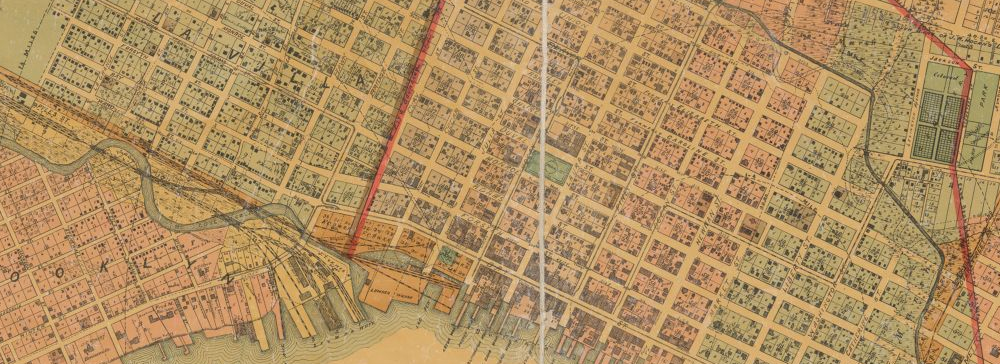
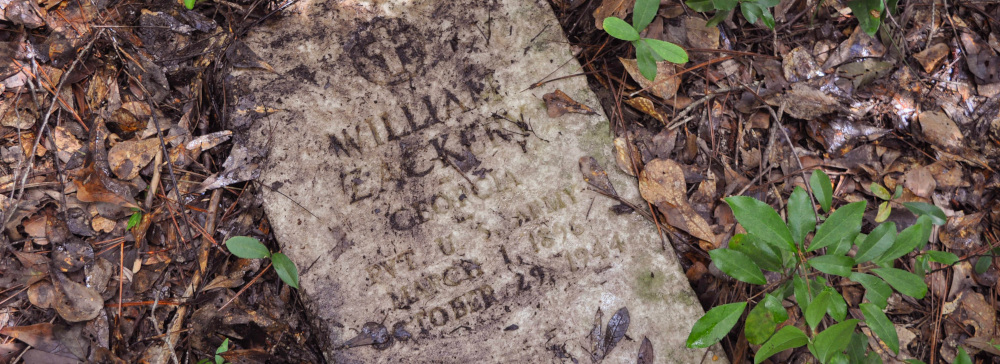
    In cooperation with the Okefenokee Heritage Center in Waycross, Georgia, the Red Hill Cemetery Project seeks to develop an interactive, publicly accessible, virtual cemetery that documents the history of Red Hill Cemetery and preserves the memory of those interred within it. Over the last half century, the site has suffered from neglect, intentional vandalism, and aborted efforts at redevelopment, leaving the nearly six acre parcel overgrown with brush and pines and marked by open graves and toppled monuments. With as many as 2,000 burials, some of them dating from the 1800s, the cemetery, even in its current condition, memorializes the lives and struggles of an African American community during a period of monumental political, social, and cultural change. By mapping and identifying graves, developing a database of names and dates, and conducting oral histories of surviving family members, the Red Hill Cemetery Project will record often-neglected voices before they fall irretrievably silent. 

    The project will document, catalog, and map this neglected cemetery through oral interviews, archival research, and field and computer mapping applications. The resulting virtual cemetery, complete with interactive maps, documents, and searchable databases, will serve as an important pedagogical, community, and scholarly resource. Publication through the Digital Humanities Institute will foster multidisciplinary approaches to African American history, while allowing students from the various colleges to engage and contribute. At the same time, by participating in the production and dissemination of new knowledge, students will develop valuable research and technological skills essential for academic and career success.

    Project Leaders

    Chris Baynard headshotChris Baynard is associate professor in geography and GIS (Geographic Information Systems) in the Department of Economics and Geography. He teaches courses in GIS and economic, cultural and physical geography. Other classes include graduate-level economic geography and GIS, as well as Intermediate GIS and Introductory remote sensing, offered as directed independent study courses.


    David Sheffler headshotDavid Sheffler is an associate professor in the Department of History. Although his research and teaching focuses on the European Middle Ages, as department chair he has also helped to develop hands-on community-based learning projects, including oral histories, digital archives, and spatial history projects.


    Felicia Bevel headshotFelicia Bevel is an assistant professor in the Department of History. Her research and teaching interests include African American History, U.S. cultural history, and southern studies. Her current book project examines twentieth century American cultural productions that romanticized the Old South and circulated outside the U.S. She also serves on the Digital Humanities Institute's Advisory Board and the Africana Studies Planning Committee


    Michael Boyles headshotMicheal Boyles is the graphic designer for the Center for Instruction and Research Technology (CIRT). As a creative collaborator, he has assisted with the photography, archives, design, and execution of the Red Hill Cemetery Project websites and presentations, as well as partnering on the Digital Humanities Institute projects for the UNF Pilgrimage Project, and Voces y Caras: Hispanic Communities of North Florida


    Gordon Rakita headshotGordon Rakita is a bioarchaeologist and professor of anthropology in the Department of Sociology, Anthropology and Social Work. He also serves as Associate Vice President for Faculty Excellence & Academic Engagement at UNF. His areas of expertise include bioarchaeology, anthropological approaches to mortuary and other ritual behavior, analytical data management and statistical analyses, emergent social inequality and complexity, and evolutionary theory.

  • Revista Tierra

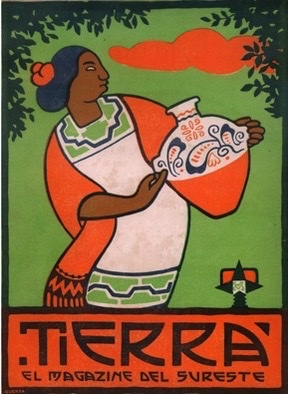
    Tierra was published in Yucatán by the Socialist Party of Southeast Mexico, beginning in 1918. The publication started as a daily newspaper, but following the election in 1922 of Felipe Carrillo Puerto, Mexico's first democratically chosen socialist governor, Tierra was converted to a weekly magazine. Each issue sought to advance the agenda of Carrillo Puerto's government, which included the restoration of communal lands to rural communities, women's rights, education, and the elevation of the region's Indigenous past. Starting on May 1, 1923, thirty-three weekly issues were published prior to the assassination of Carrillo Puerto in January 1924.


    This project presents all the 1923 issues, with complete document images and an index of the recurring sections and the names of authors. The project is led by Clayton McCarl, professor of Spanish and digital humanities at UNF, and Damiana Leyva Loría, a doctoral candidate in Educational Systems and Environments at the Benemérita Autonomous University of Puebla. Erin Garry (Spanish, 2024) and Peri Manwell (Spanish/art history, 2024) served as associate editors during the initial phases of the project. Over thirty other UNF students have contributed through transcription, TEI-XML markup, and the creation of Dublin Core metadata on the project’s Omeka website.


    Cover of Revista Tierra magazine. Displays a woman holding a pot.


    Project Leaders 


    headshot of Dr Damiana Leyva LoiaDamiana Leyva Loría (director and general editor) is a doctoral candidate in Educational Systems and Environments at the Benemérita Autonomous University of Puebla.  Her work focuses on theory and epistemology of literature, curricular design, dissemination, and didactics. She was the first woman in her family to obtain university and graduate studies, thanks to the efforts of all the women who preceded her, starting with her great-grandmother, a soldier in the Mexican Revolution. Since 2015, she has volunteered in the National Reading Rooms Program (PNSL).


    Headshot of Dr. Clayton McCarlClayton McCarl is a professor of Spanish and digital humanities. He leads several digital editing projects at UNF and coordinates the Alliance for Digital Research on Early Latin America, an international scholarly collective. 

  • Shared Lines/LĂ­neas Compartidas: UNF Digital Archive of Poetry
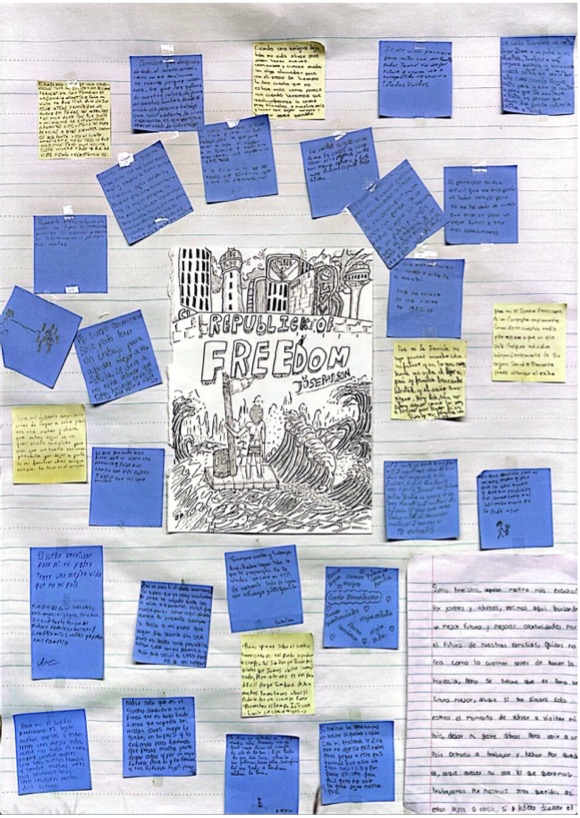
    Post-it notes and drawing attached to large sheet of white paper

    Andrea Adhara Gaytan Cuesta, assistant professor of Spanish and English
    Constanza López Baquero, professor of Spanish

    Shared Lines/Líneas Compartidas will be a vibrant, multilingual, and interactive digital archive dedicated to showcasing poetry from around the world. Derived from the work and archive done for 10 years at UNF’s International Poetry Festival of the Department of Languages, Literatures, and Cultures, this project intends to bring together international poets, student voices, poetry clubs, and social media content, providing a dynamic space for collaboration and engagement. The archive will empower poets to share their works, participate in global conversations, and interact with a wider audience. Through a variety of features like international poetry festival recordings, conferences, workshops, student poetry submissions, and social media integration, "Shared Lines/Líneas Compartidas" will amplify voices and celebrate the universal art of poetry.

  • UNF Latinx

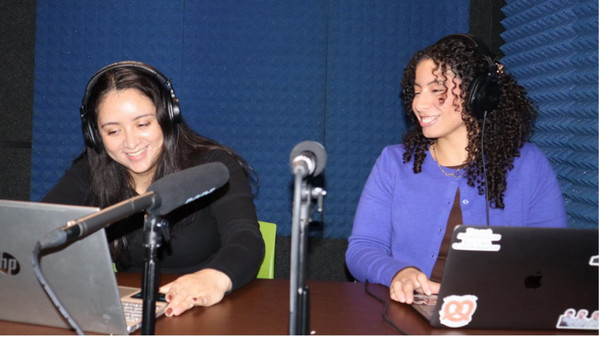
     Two students at a desk with microphones and laptops

    Andrea Adhara Gaytan Cuesta, assistant professor of Spanish and English
    Constanza López Baquero, professor of Spanish

    UNF Latinx is a collection of podcasts produced by students in the classes of Dr. Constanza López Baquero and Dr. Andrea Gaytán Cuesta.

    In recent years, podcasts have become an important tool for higher education. This technology is especially valuable for Latinx students who wish to research and showcase their culture and document their experiences as Latinx in the United States. Podcasting offers these students the opportunity to be part of a wide-ranging knowledge of production, where they use critical thinking to analyze cultural differences from a variety of perspectives and prepare for the future by using digital media. Furthermore, these projects are collaborative, and require them to debate educational, social, and ethical issues in Latinx communities in the U.S. and in their countries of origin.

  • UNF Pilgrimage Project

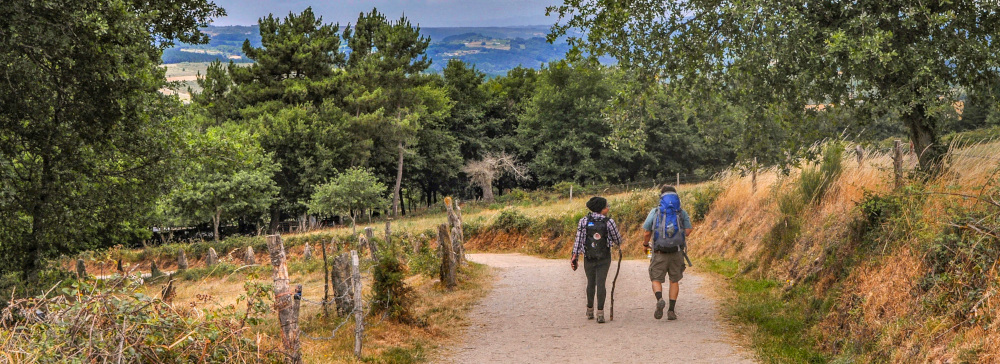
    map of Spain with pilgrimage trail markedThe University of North Florida Pilgrimage Project combines interdisciplinary approaches with digital and STEM technologies and applies them to the study of pilgrimage. Broadly defined, pilgrimage encompasses the flow of people, ideas, technology and trade along a sacred or spiritual route. It also includes the range of meanings pilgrims and communities attach to pilgrimage practices. This project, which focuses on the Camino de Santiago in northern Spain, grew out of a 2015 study abroad trip led by the Department of History and the Department of Sociology, Anthropology, and Social Work. A subsequent trip in 2017 contributed additional materials including, soundscapes, images, landscape readings, 360° photographs, mapping projects, and interviews.

    As this field-work/digital project moves forward, we will continue to conduct and record interviews to gain insights into contemporary pilgrimage practices and utilize GIS techniques to examine the economic, environmental, and spatial dimensions of pilgrimage. Future initiatives will include explorations of the business of pilgrimage with special focus on sustainability.

    Publication through the Digital Humanities Initiative contributes to a more thorough and multidisciplinary understanding of the phenomenon of pilgrimage and encourages participation across disciplines and colleges. At the same time, by producing and disseminating new knowledge, students develop valuable research and technological skills essential for academic and career success. This is particularly important in contemporary workplaces that value both creativity and technological knowhow.


    Project Leaders


    Ron Lukens-Bull headshotRon Lukens-Bull is a Professor of Anthropology and Religious Studies at UNF. He has taught courses on pilgrimage during his tenure at UNF. He has published about sacred geography in Southeast Asia and modern Christian pilgrimage in the United States. In addition to the 2015 Camino trip, he has lead groups of UNF students to Morocco, Malaysia, Singapore, and Thailand. Having studied Muslim societies for the past 25 years, he is interested in the Muslim art and designs worked into medieval sites along the Camino de Santiago. He is a member of the American Anthropological Association and the Society for the Anthropology of Religion.


    David Sheffler headshotDavid Sheffler is an Associate Professor in the Department of History. His research and teaching focuses on the Middle Ages with special interests in medieval universities, the Crusades, heresy and pilgrimage. In the summer of 2015 he led 15 university students on a three-week pilgrimage along the Spanish Camino de Santiago. He also serves as advisor to UNF’s chapter of Phi Alpha Theta — a national history honors society that supports undergraduate and graduate research.


    Chris Baynard headshotChris Baynard is Associate Professor in Geography and GIS (Geographic Information Systems) in the Department of Economics and Geography. His research and teaching center on geospatial applications to natural resource management at the landscape level. Additionally, he has developed and let study-abroad courses focused on the wine industry in Argentina and Chile, renewable energy and sustainability in Holland, Germany and Spain and is now leading a new course on mining and sustainable business practices in Chile. Professor Baynard also serves as the director for the Center for Sustainable Business Practices for the Cogging College of Business and serves on the Executive Board fof the Environmental Center. 


    Michael Boyles headshotMichael Boyles is a graphic designer at the Center for Instruction and Research Technology at UNF. His interest in Spanish culture and the Camino de Santiago led him to joining the 2015 journey to support the professors and students in their travels while documenting the trip with capturing photos, creating a website, developing the student’s blog, GIS satellite mapping of the six-day hike, and publishing a book of the experiences throughout the excursion. His design credentials cover a multitude of disciplines that incorporate print, environmental design, signage, trade shows, product design, package design, illustration and Web design.

  • Viola Muse Digital Edition

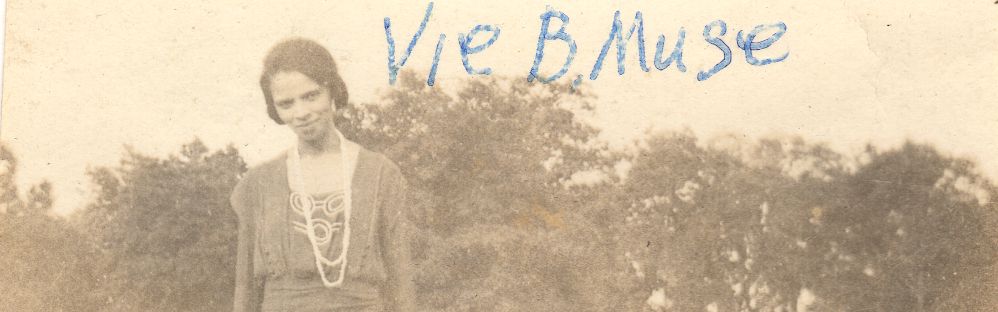
    Promotional Image for the Viola Muse Digital Edition: Black and White Image of Muse

    Laura Heffernan, professor of English
    Tru Leverette Hall, professor and chair, Department of English
    Clayton McCarl, professor of Spanish and Digital Humanities

    The Viola Muse Digital Edition (VMDE) presents the notes and draft narratives of Viola B. Muse (1898-1981), who worked from 1936 through 1939 as an interviewer and writer in the Negro Writers Unit of the Florida Federal Writers Project in Jacksonville, Florida. Muse and the other writers in the Negro Writers Unit, including Zora Neale Hurston, attempted to document the achievements and folkways of African American communities in Florida, and in Jacksonville specifically. 

  • Voces y Caras: Latinx Communities of North Florida

    The project Voces y Caras: Hispanic Communities of North Florida has grown from a series of interviews performed by students in the course SPN3351 Communication and Communities for Heritage Speakers of Spanish. These interviews focus on the rapidly growing Hispanic community of North Florida, which – as this project makes evident – is very diverse. The interviewees come from, or have connections to Spanish-speaking countries in Europe, Africa, and the Americas. They occupy different roles in our community; some are doctors, business executives, teachers, police officers, undocumented migrants, students, parents, etc. Some have been here for many years, and others came recently. Some escaped political repression and violence in their own countries, others came looking for a better future, and some came following their loved ones. They all represent a happy, vibrant, family-oriented, hard-working community whose members strive to achieve their goals and dreams. They have assimilated to American society while maintaining a strong cultural identity. This endeavor started in the spring semester of 2012, and has continued until the present time becoming an annual event.

    All interviews are archived in the Special Collections of the Thomas G. Carpenter Library and can also be accessed online at https://vocesycaras.unfdhi.org. Each spring, students discuss their experience conducting the interviews at a public presentation held in the Special Collections Reading Room, and each fall an exhibition related to the project is featured in the display cases outside of Special Collections as part of Hispanic Heritage Month.


    Constanza Lopez headshotProject leader 


    Constanza López is an associate professor of Spanish in the Department of Languages, Literatures and Cultures. Her research interests include Latin American Literatures of the XX and XXI centuries, women writers, autobiography and testimonio, gender and violence, film and documentary, human rights and activism, migrations, and Hispanics in the U.S. She is author of Trauma, memoria y cuerpo: el testimonio femenino en Colombia (2012). She is currently working on a manuscript for a book titled Collective Efforts: Reterritorializing Spaces of Violence in Colombia.


    Michael Boyles headshotCreative collaborator 


    Michael Boyles is coordinator of graphic design for the Center for Instruction and Research Technology (CIRT). He has assisted with the design and execution of the Voces y caras website and the annual fall exhibit of the project (held in the Thomas G. Carpenter Library) since the project’s inception in 2012. His ongoing support for this project included his presentation of Voces y caras with Dr. López at the inaugural DHI Showcase in November, 2016.

  • Water Stories: A River Harvest

    Group of five students sitting in open field in front of trees and a pond.


     Water Stories: A River Harvest


    Water Stories: A River Harvest. In collaboration with Local Initiatives Support Corporation (LISC) and St. Johns Riverkeeper (SJR), "Water Stories: A River Harvest" is an oral history study and a theatrical production and digital program on the environmental and communal history of Jacksonville, Florida’s Ribault River/Moncrief Creek corridor. The river connects multiple African American neighborhoods of historical significance undergoing revitalization and environmental remediation. The project’s goal is to document, preserve, and augment community assets—economic, residential, environmental, communal—in this area of local historical significance: it contains the largest concentration of African American cemeteries in the state and is home to a large concentration of Black military veteran gravesites; it is the home of early 20th century African American philanthropist Eartha MM White and her farm that still supplies food to the Clara White Mission. It has also been the site of environmental degradation—having been the location of two superfund sites and having the largest concentration of septic systems in Duval County, further polluting the river.