Research mentors and projects for the 2013 UNF REU Program 

Check back regularly.  More REU mentors will be added shortly!


Ecology of the Gopher Tortoise   

  Dr. Joe Butler, Wildlife Conservation Issues, especially turtles 


My students and I have been evaluating the gopher tortoise population on the campus of UNF for over 20 years.  This species is threatened throughout most of its range, mainly due to habitat loss caused by forestry practices, the Florida citrus industry, and development for houses and malls.  Our campus population is fairly well protected which has allowed us to continue this long-term study.  Each year I assemble a team of students, mostly undergraduates, who perform daily fieldwork.  We begin the season by re-locating all the 400 plus burrows and assessing their activity.  By mid-May tortoises begin depositing nests and we do our best to locate as many as we can.  We equip nests with nest protectors to prevent predation by raccoons, then we monitor them daily until they hatch (usually mid-August to September).  We also capture, measure, weigh, and mark (if necessary) as many tortoises as we can each year.  This allows us to monitor demographic changes over time.  This year we will also be experimenting with the use of a robotic camera that we will send into burrows to determine occupancy.  We have successfully built and used a version of this camera before, and now we are trying to make it smaller so it will fit into juvenile burrows as well as those of adults.


Ecology and Biology of Sharks and Rays in north Florida waters  


Dr. Jim Gelsleichter, Shark Biology, Physiology, and Ecotoxicology 


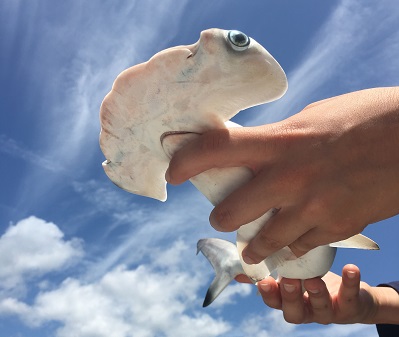
My research focuses on the ecology of sharks and rays in northeast Florida waters.  I also conduct research on the physiological factors that regulate shark reproduction, particularly hormones, and the effects that environmental pollution can have on shark reproduction and overall health.  Undergraduates that conduct research in my program participate in the UNF Shark Biology Program’s annual field survey, which examines the species composition, abundance, distribution, and movement patterns of shark and ray populations in northeast Florida waters.  The goal of this research is to identify areas that are in need of special consideration and, in some cases, protection because they serve as essential habitat for ecologically and economically important and federally regulated shark species.  Students also conduct laboratory research geared towards identifying the roles of hormones in shark reproduction and the effects of pollutant exposure on sharks residing in contaminated habitats including areas of the Gulf coast impacted by the Deepwater Horizon Oil Spill. 


Behavioral Ecology of Estuarine Bottlenose Dolphins   


Dr. Quincy Gibson, Marine Mammal Behavioral Ecology and Social Development  


My lab conducts weekly boat-based photo-identification and behavioral surveys of bottlenose dolphins in the St. Johns River and is currently addressing a number of research questions related to population dynamics and behavioral complexity.  Our data indicate that the St. Johns River provides important year-round habitat for estuarine bottlenose dolphins.  However, given the river’s metropolitan location, these resident dolphins are at a high risk of anthropogenic disturbance.  Throughout our study, a number of individual dolphins have developed skin lesions, which can be an indication of disease and may be related to anthropogenic factors. Long-term photographic documentation of these lesions can be used as a non-invasive tool to assess the health status of the population.  REU students working in my lab will conduct photographic analysis of skin lesions on wild bottlenose dolphins.  This will involve categorizing skin lesions by type and severity, and examining potential effects of season, location, and residency patterns on lesion prevalence. Students will spend at least one full day per week assisting with data collection out on our research vessel on the St. Johns River.  The remaining time will be spent processing and analyzing data in a computer lab.


Evolutionary Genetics, Speciation, Invasive Species Biology 


Dr. Matt Gilg, Evolutionary Genetics, Speciation, Invasive Species Biology 


Students working with me will have the opportunity to work on one of two research projects: 


Selection on the gamete recognition protein M7 lysin  


The first involves studying the evolution of barriers to reproduction between two sub-species of mussels (Mytilus edulis and M. galloprovincialis) from the Atlantic coast of Europe.  I am interested in how proteins involved in fertilization diverge and how this divergence affects the ability of males of one species fertilize the eggs of a second species.  A student working on this project will use molecular genetic techniques such as PCR and restriction enzyme digests to analyze a gene involved in fertilization called M7 lysin.  Samples of recently settled mussel larvae will be analyzed to test for genetic differences among distinct cohorts of larvae.


Human mediated mechanisms of dispersal of the invasive green mussel 


The second research project focuses on a local invasive species of mussel (the green mussel, Perna viridis) that is native to the Indo-Pacific.  I am interested in factors that may affect the spread of this species to other parts of the United States.  One possibility is that dredging equipment used by the U.S. Army Corps of Engineers may act to spread invasive marine species such as the green mussel when it is moved from one location to another.  It is also possible that spoil islands that are made from the relocation of dredged material are hot spots for the establishment of invasive species allowing them to increase in population size and spread.  Students working on this project will be conducting field surveys of spoil islands of various ages and dredging equipment in the local area to determine the likelihood of these contributing to the spread of green mussels and other invasive species.


Reproductive Ecology and Impact of Invasive Species 


Dr. Eric Johnson, Population dynamics and quantitative fisheries ecology 


Students working in my research program will have the opportunity to work on one of two research projects: 


Reproductive ecology of the blue crab in the St. Johns River: A comparative approach: 

Charles Darwin observed that males of many species contributed little to the sexual partnership; in other words sperm were cheap and eggs were expensive.  This basic evolutionary concept has persisted through time and is the dominant paradigm in modern fisheries management where the overwhelming goal is the protection of mature females and the potential effect of males on reproductive success is ignored.  However, in numerous species, the ability of females to fertilize their eggs is limited by the amount and quality of sperm that is contributed by males during mating.  In particular, the unique characteristics of blue crab life history and the intense fisheries for this species make them an ideal model system for testing hypotheses related to sperm limitation.  The overall goal of the project that a REU student will participate in is to fill key data gaps on basic blue crab reproductive ecology for the St. Johns River and compare the results to ongoing studies in Chesapeake Bay, a system with very different biological, environmental, and human forcing factors.  Specifically, the results will provide important biological data necessary for effective management of blue crabs in the St. Johns River, and generate a strong comparative data set for ongoing tests of sperm limitation in Chesapeake Bay.


Food web impacts of invasive lionfish in nearshore coastal ecosystems of Florida 

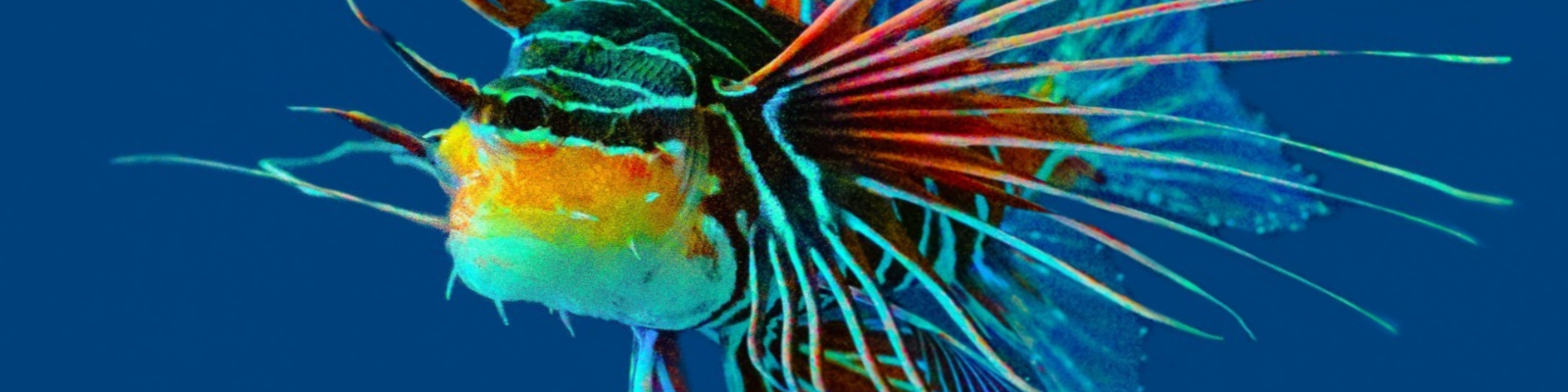
Introductions of invasive species pose a serious threat to native ecosystems worldwide.  Once established, invasives can precipitate far reaching and often unpredictable effects in native coastal ecosystems through predation, competition for prey resources or habitat, and can ultimately lead to declines in the abundance, diversity or extinction of native biota.  Two closely related species of lionfish native to the Indo-Pacific were introduced to Florida’s east coast and have expanded rapidly throughout the marine waters of the western Atlantic Ocean and Caribbean Sea.  Although now common on marine coral reefs, lionfish have only recently been observed within estuaries, in particular residing in mangrove and seagrass ecosystems, with unknown, but potentially substantial detrimental effects for many economically important commercial and recreational fishes that utilize these habitats as juvenile nurseries.  In a second project that REU students can participate in, I propose to investigate the food web impacts of invasive lionfish in Florida estuaries with particular focus on these recently invaded estuarine ecosystems using both traditional and novel approaches.  This research will enable fishery biologists to more effectively manage this established species, help predict the impact of lionfish on economically important native fishes, and provide key data for ecosystem-based fisheries management which relies critically on knowledge about trophic dynamics and food web structure.


Salt Marsh Restoration   


Drs. Matt Kimball and Kelly Smith, Fish Ecology  


Comparing different living shoreline methods for salt marsh restoration within the Guana Tolomato Matanzas National Estuarine Research Reserve (GTMNERR). 


The GTMNERR has several areas where marshes (shorelines) are experiencing significant erosion.  The long term goal of the project that a REU student will participate in is to reduce erosion and salt marsh loss in an area utilized by a number of important recreational and commercial fishery species.  A previously funded project established nearshore oyster reefs to promote shoreline growth.  The new project (expected to begin in May of 2013) will add additional treatments to reduce erosion using fiber logs embedded with ribbed mussels.  These structures should accelerate shoreline accretion as well as provide habitat structure for coastal fishes.   Students would assist in pre-restoration monitoring of coastal fauna (primarily fishes and invertebrates), restoration implementation, and some post-restoration monitoring of habitat use by coastal fauna.  Side projects that students could develop under advisement from the co-mentors include:  comparative settlement patterns of benthic fauna with shoreline treatment, population structure of resident salt marsh and oyster reef fishes in the restoration area, comparative growth rates of salt marsh cord grass with shoreline treatment.  This is a field-based project so students will need to be comfortable working under rigorous field conditions.  The project should be of particular interest to students interested in ecological restoration.


Marine 

Mammology 

  Dr. Julie Richmond, Marine Mammalogy 


REU students working in my research program may be involved in one of the two following projects.  In both cases, REU students will complete laboratory based projecst that may be presented at an international scientific meeting.  Participating students will learn and become proficient with laboratory assay techniques including radioimmunoassays, western ligand blots, spectrophotometric assays and other basic molecular biology techniques.   


Milk vs. Formula: Examination of Metabolic Hormone Profile in Common Pinniped Rehabilitation Formulas 


Many rehabilitation facilities, zoos, and aquaria in the United States, Canada, and Europe care for injured or abandoned pinniped (seal and sea lion) pups.  While rehabilitation is common, success rates are low with 50-70% mortality. Nutrient intake is an essential component to rehabilitation success.  First year survival of pinniped pups is positively correlated to body mass.  In the wild, seal pups nurse on energy dense, lipid rich milk (60% lipid) that results in an average daily gain (ADG) of 5 to 9% of body mass per day.  Rehabilitated pups are fed via esophageal feeding tube with formula that maximizes lipid and energy content, on the assumption that these are key parameters.  However, to our knowledge no attempt has been made to evaluate and compare the endocrine contribution of natural pinniped milk with commonly used rehabilitation formulas.  In contrast to formula fed pinnipeds, human infants fed formula grow at a faster rate than breast fed infants.  Human formula contains several bioactive hormones in greater quantities than breast milk including increased ghrelin, and insulin-like growth factor.  This study will compare metabolic hormone profiles in pinniped rehabilitation formulas with milk from free-ranging pinnipeds.  These data will provide new information that could improve rehabilitation formulas. Addition of metabolic hormones to formula may improve growth rate and therefore rehabilitated pup survival. 


Determining the Influence of Seasonality on the Metabolic Hormone Response to Nutritional Stress in Steller sea lions (Eumetopias jubatus) 


In extreme cases, nutritional stress due to a reduction in the quantity or quality of prey consumed, may lead directly to emaciation and death, however, more subtle effects of nutritional stress may also result in decreased survival.  Nutritional stress can make animals vulnerable to disease and predation which may have substantial impacts on survival and population trends.  Between 1970 and 2000, Steller sea lions (Eumetopias jubatus) underwent an 80% reduction in population size and have not yet recovered.  Although the cause for the population decline and slow recovery of these populations is likely multifaceted, early evidence did support the hypothesis that nutritional stress contributed to the initial population decline; however, later research has been inconclusive. Limitations of this research, include poor knowledge of the mechanisms linking nutritional stress to changes in survival and reproductive rates.  Confounding our understanding of these mechanisms is the strong seasonality of normal Steller sea lion life history.  Studies have suggested that seasonal physiology of Steller sea lions may have a greater impact on body condition, one metric used to identify acute nutritional stress, than changes in prey quality.  Therefore the focus of this research is to evaluate the physiological mechanisms of the seasonal response of Steller sea lions to nutritional stress.  Understanding the seasonality of the physiological response to nutritional stress will allow us to better understand and quantify the impact in wild populations. 


Stress Responses 

of Marine Organisms 


Dr. Cliff Ross, Stress Responses of Marine Organisms 


Pathogen-Induced Defense Responses in Seagrasses  


Seagrasses are widely distributed marine vascular plants that are an integral component of coastal ecosystems. Several seagrass species are susceptible to periodic outbreaks of a “wasting disease” (presumed to be affiliated with the opportunistically pathogenic slime mold Labyrinthula sp.) that can contribute to rapid population declines. Although there is an increasing awareness of the impacts of diseases in the marine environment, the elucidation of marine plant defense responses against invading pathogens is just emerging. Fortunately, due to the value of agriculturally related plants, a tremendous amount of research has been placed on understanding the basis of active defense responses in terrestrial plants. Bearing in mind that marine angiosperms (seagrasses) are descendants of terrestrial plants, we can use this work as a platform to further our understanding of defense systems in marine plants. Using seagrass (turtle grass) and Labyrinthula sp. as a model system, we are particularly interested in the structural and functional identification of elicitors, intracellular signal transduction components, and the transcriptional activation of defense proteins and secondary metabolites. Specific projects will address: 1) how seagrasses produce secondary metabolites in response to infection; and 2) ff changing environmental conditions (e.g. changes in light, salinity, temperature) influence seagrasses susceptibility to infection.